
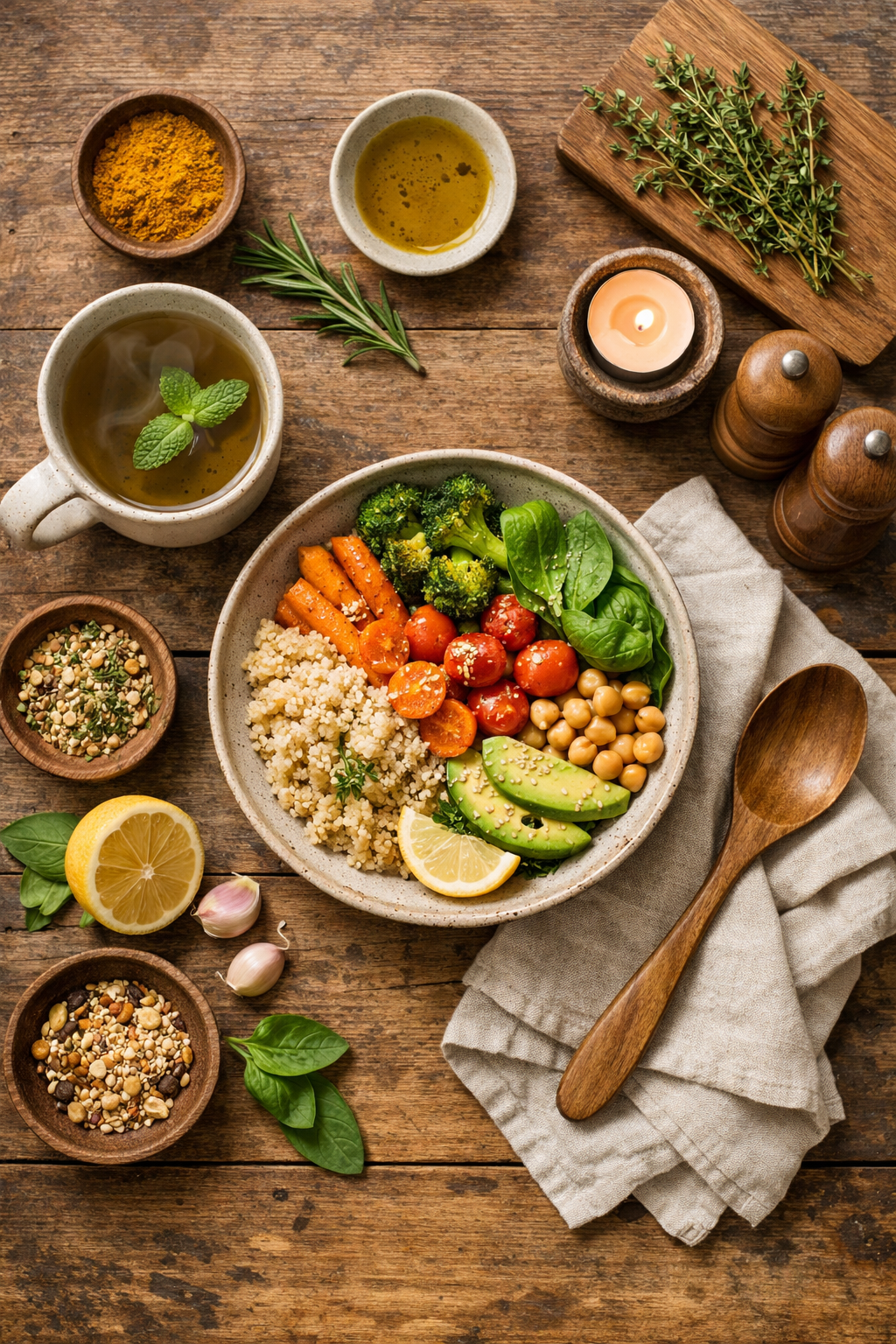
The Philosophy of Mindful Cooking
Mindful cooking is the practice of preparing food with full presence, intention, and sensory awareness. Instead of rushing through meals or cooking on autopilot, mindful cooking invites you to slow down, notice the colors and textures of your ingredients, breathe in the aromas, and connect with the simple joy of creating something nourishing.
At its heart, mindful cooking is about being fully here — letting the act of chopping, stirring, or seasoning become a grounding ritual rather than a task to complete. This shift transforms the kitchen into a space of calm, creativity, and self‑care.
Why Mindful Cooking Supports Well‑Being
Mindful cooking benefits your whole self — body, mind, and emotions:
- Reduces stress and anxiety by slowing your pace and anchoring your attention
- Improves digestion as a calmer nervous system supports better nutrient absorption
- Encourages healthier food choices because you’re more aware of what your body truly needs
- Strengthens your relationship with food by turning meals into moments of care rather than obligation
- Creates emotional balance through soothing, repetitive movements and sensory focus
When you cook mindfully, you nourish more than your body — you nourish your inner world.
How Mindfulness Transforms the Cooking Experience
Mindfulness turns cooking into a meaningful, restorative experience:
- Presence replaces pressure Instead of rushing, you move with intention, which naturally calms the mind.
- Senses become anchors The sound of chopping, the warmth of the pan, the scent of herbs — these sensory cues pull you into the moment.
- Creativity opens up When you’re not distracted, you experiment more, trust your intuition, and enjoy the process.
- Joy returns to the kitchen Cooking becomes something you look forward to — a ritual that supports your well‑being rather than drains your energy.
Mindfulness doesn’t change what you cook as much as it changes how you cook — and that shift can transform your entire relationship with food.
Essential Ingredients for Mindful Meals
Choosing the right ingredients is one of the most powerful ways to support your physical and emotional well‑being. When you cook mindfully, you naturally gravitate toward foods that feel nourishing, energizing, and grounding. These ingredients not only enhance flavor — they also help regulate mood, support digestion, and provide steady, balanced energy.
Ingredients That Support Whole‑Body Wellness
- Fresh vegetables Rich in fiber, antioxidants, and vibrant colors that support immunity and digestion.
- Leafy greens Spinach, kale, arugula, and chard provide minerals, hydration, and gentle detoxification.
- Whole grains Quinoa, brown rice, farro, and oats offer steady energy and support gut health.
- Healthy fats Olive oil, avocado, nuts, and seeds help regulate hormones and keep you satisfied.
- Lean proteins Beans, lentils, tofu, eggs, fish, or poultry support muscle repair and balanced blood sugar.
- Fresh herbs and spices Basil, parsley, turmeric, ginger, garlic, and rosemary add flavor while reducing inflammation.
- Seasonal fruits Naturally sweet, hydrating, and full of vitamins that support mood and immunity.
These ingredients form the foundation of meals that feel nourishing rather than heavy — meals that support both physical and emotional well‑being.
How to Select Fresh, Wholesome Ingredients Mindfully
Mindful ingredient selection is less about rules and more about awareness. It’s about slowing down enough to notice what your body needs and choosing foods that feel alive, vibrant, and supportive.
Mindful Selection Tips
- Look for color and vibrancy Bright, rich colors often signal nutrient density.
- Check texture and firmness Fresh produce should feel crisp, not wilted or mushy.
- Use your sense of smell Herbs, citrus, and ripe fruits should have a natural aroma.
- Choose seasonal ingredients They’re fresher, more flavorful, and often more affordable.
- Read labels with intention Aim for short ingredient lists and minimal processing.
- Tune into your body Ask yourself: What would feel nourishing today? What would support my energy?
Mindful selection turns grocery shopping into a grounding ritual — a moment to reconnect with your body’s needs.
How Mindful Ingredient Choices Lead to Better Meals
When you choose ingredients with presence and intention:
- Your meals become more colorful and balanced.
- You naturally reduce processed foods and added sugars.
- You build plates that support digestion, energy, and mood.
- You feel more connected to the food you’re preparing.
- Cooking becomes an act of self‑care rather than a chore.
Mindfulness doesn’t just change how you cook — it changes what you choose to cook with, creating meals that nourish you from the inside out.
Mindful Cooking Recipes to Try
These recipes are designed to help your readers slow down, savor the process, and reconnect with the joy of cooking. Each one uses whole, vibrant ingredients and encourages sensory awareness — the colors, textures, aromas, and rhythms that make mindful cooking so grounding.
1. Warm Roasted Vegetable & Quinoa Bowl
A grounding, colorful bowl that’s perfect for lunch or dinner.
Ingredients
- 1 cup cooked quinoa
- 2 cups mixed vegetables (carrots, broccoli, zucchini, peppers)
- 1–2 tbsp olive oil
- Salt, pepper, garlic powder
- Fresh lemon
- Optional: tahini drizzle or hummus
Mindful Moment: Notice the colors before and after roasting — a quiet transformation.
Variations
- Vegan: As written
- Gluten‑Free: As written
- High‑Protein: Add chickpeas, tofu, or grilled chicken
- Low‑Carb: Swap quinoa for cauliflower rice
2. One‑Pot Lentil & Vegetable Soup
Comforting, aromatic, and deeply grounding.
Ingredients
- 1 cup lentils (any variety)
- 1 onion, chopped
- 2 carrots, chopped
- 2 celery stalks, chopped
- 1 tsp turmeric
- 1 tsp cumin
- 4 cups vegetable broth
- Fresh parsley or lemon to finish
Mindful Moment: Stir slowly and notice the aroma as the spices bloom.
Variations
- Vegan: Use vegetable broth
- Gluten‑Free: As written
- High‑Protein: Add white beans or shredded chicken
- Creamier Texture: Add coconut milk
3. Simple Stir‑Fry with Ginger & Garlic
A quick, vibrant meal that invites sensory engagement.
Ingredients
- 2 cups mixed vegetables (snap peas, peppers, broccoli)
- 1 tbsp grated ginger
- 2 cloves garlic, minced
- 1 tbsp tamari or soy sauce
- 1 tsp sesame oil
- Optional: tofu, shrimp, or chicken
Mindful Moment: Listen to the rhythm of the sizzle as the vegetables hit the pan.
Variations
- Vegan: Add tofu
- Gluten‑Free: Use tamari
- Low‑Sodium: Reduce tamari and add citrus
- High‑Protein: Add edamame or chicken
4. Lemon‑Herb Chickpea Salad
Bright, refreshing, and perfect for a mindful lunch.
Ingredients
- 1 can chickpeas, rinsed
- 1 cucumber, diced
- 1 handful cherry tomatoes
- Fresh parsley or dill
- Juice of 1 lemon
- 1 tbsp olive oil
- Salt & pepper
Mindful Moment: Notice the crisp textures as you chop each ingredient.
Variations
- Vegan: As written
- Gluten‑Free: As written
- Mediterranean Style: Add olives and feta
- High‑Protein: Add quinoa or hemp seeds
5. Fresh Fruit Bowl with Honey & Nuts
A simple, sensory‑rich breakfast or snack.
Ingredients
- 1 cup seasonal fruit
- 1 tsp honey or maple syrup
- 1 tbsp nuts or seeds
- Optional: mint or basil
Mindful Moment: Take one slow, intentional bite and notice the flavors.
Variations
- Vegan: Use maple syrup
- Nut‑Free: Use seeds
- High‑Protein: Add Greek yogurt or chia seeds
- Low‑Sugar: Skip the honey
6. Avocado Toast with Lemon & Herbs
A nourishing, grounding breakfast that encourages presence.
Ingredients
- 1–2 slices whole‑grain or gluten‑free bread
- ½ avocado
- Lemon juice
- Salt, pepper, red pepper flakes
- Optional: fresh basil or dill
Mindful Moment: Feel the texture of the avocado as you mash it — soft, creamy, grounding.
Variations
- Vegan: As written
- Gluten‑Free: Use GF bread
- High‑Protein: Add a poached egg or hemp seeds
- Anti‑Inflammatory: Add turmeric
7. Simple Turmeric Rice with Vegetables
Warm, golden, and deeply soothing.
Ingredients
- 1 cup cooked rice
- 1 tsp turmeric
- 1 cup mixed vegetables
- 1 tbsp olive or coconut oil
- Salt & pepper
Mindful Moment: Watch the rice turn golden — a small moment of beauty.
Variations
- Vegan: As written
- Gluten‑Free: As written
- High‑Protein: Add lentils or tofu
- Low‑Carb: Use cauliflower rice
Celebrating Your Meals with Mindfulness
A peaceful environment makes mindful eating feel effortless. You don’t need anything elaborate — just small, intentional touches that support relaxation.
1. Clear the Space
A tidy table helps your mind settle. Even a quick 30‑second reset can shift the energy.
2. Soften the Lighting
Warm, gentle lighting encourages your body to relax and digest.
3. Add a Sensory Anchor
Try one of these:
- A candle
- Soft background music
- A small plant or flower
- A warm cloth napkin
These subtle sensory cues help you stay grounded.
4. Minimize Distractions
Turn off the TV, silence notifications, and let this be a moment just for you.
5. Eat Slowly and Without Rushing
Let the meal unfold at a natural pace. There’s no need to hurry — presence is the goal.
6. End With Gratitude
A simple thought like “Thank you for this nourishment” helps close the meal with intention and calm.
Bringing Mindfulness to Every Meal
Mindful cooking is more than a way to prepare food — it’s a gentle invitation to slow down, reconnect with yourself, and nourish your body with intention. When you choose fresh ingredients, cook with presence, and eat with awareness, every meal becomes an opportunity to support your well‑being from the inside out.
You don’t need extra time or elaborate rituals. Just small moments of attention — the sound of chopping, the warmth of the stove, the first slow bite — are enough to shift your entire experience.
As you explore these mindful recipes and practices, let them become a grounding rhythm in your day. A way to care for yourself. A way to create calm. A way to bring more joy, balance, and nourishment into your life, one mindful meal at a time.
Leave a Reply