
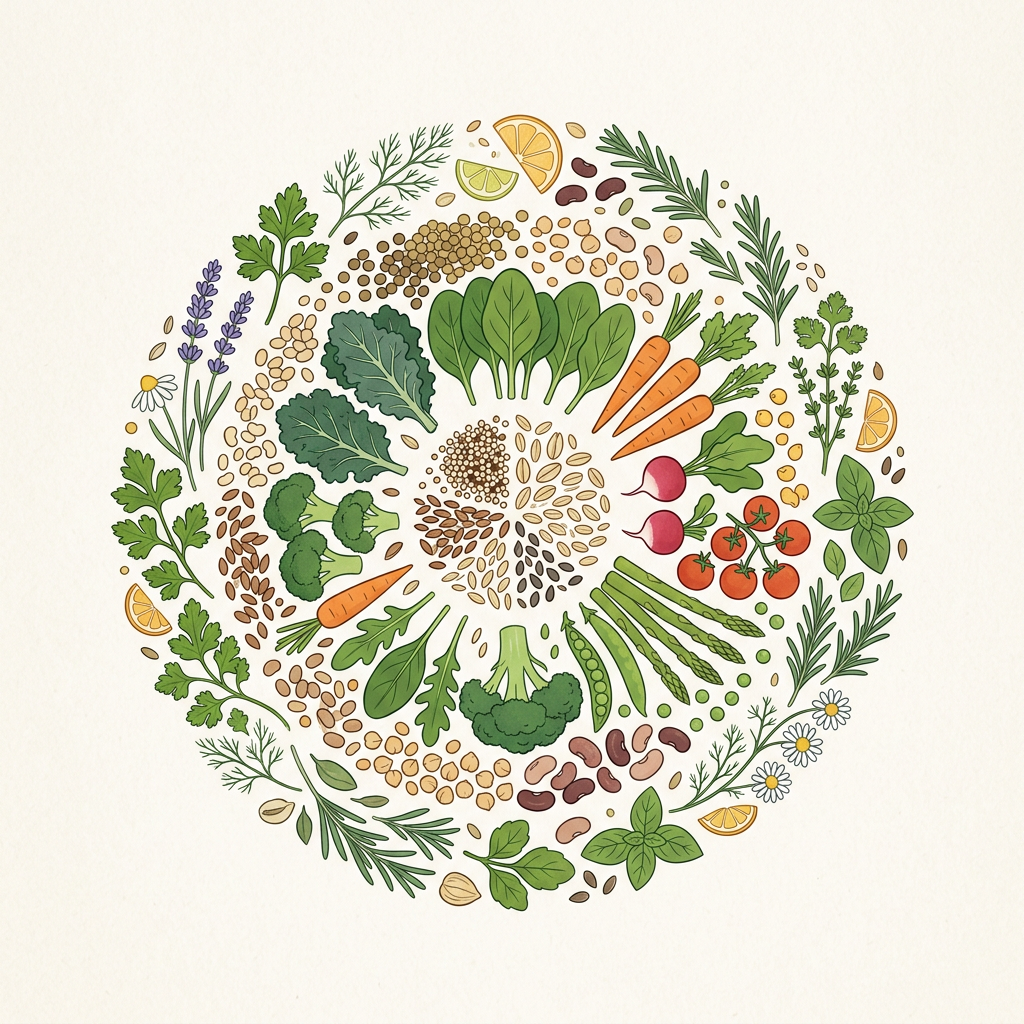
1. Understanding Mindful Cooking
What Is Mindful Cooking?
Mindful cooking is the practice of preparing food with full presence, curiosity, and intention. Instead of rushing through meals or cooking on autopilot, mindful cooking invites you to slow down, tune into your senses, and connect with the experience unfolding in front of you. It transforms the kitchen from a place of routine into a space for grounding, creativity, and self‑nourishment.
At its core, mindful cooking is about being where your hands are — noticing the colors of fresh ingredients, the rhythm of chopping, the warmth of the stove, and the aromas rising as flavors develop. These small sensory moments help quiet mental noise and bring you back into your body.
Principles of Mindful Cooking
- Presence over perfection — The goal isn’t flawless meals; it’s showing up fully for the process.
- Slowing the pace — Moving intentionally helps regulate your nervous system and reduces stress.
- Engaging the senses — Sight, smell, touch, sound, and taste become anchors to the present moment.
- Curiosity and non‑judgment — When something doesn’t go as planned, you meet it with openness rather than frustration.
- Gratitude for nourishment — Appreciating the ingredients, the effort, and the act of feeding yourself or others.
- Connection to your body — Listening to hunger cues, energy levels, and what foods feel supportive.
These principles mirror the same grounding qualities found in mindful movement, mindful eating, and your broader wellness philosophy.
The Philosophy Behind Being Present While Cooking
Cooking is one of the few daily activities that naturally invites mindfulness — if we allow it. When you shift from “getting dinner done” to “experiencing dinner as it unfolds,” the kitchen becomes a place of calm rather than pressure.
Being present while cooking:
- Reduces overwhelm by giving your mind a single, soothing point of focus
- Creates emotional spaciousness by slowing your internal pace
- Builds self‑trust as you learn to follow your senses instead of rushing
- Strengthens creativity because presence opens room for experimentation
- Deepens enjoyment of both the process and the meal itself
This presence is a form of self‑care — a way to reconnect with yourself in the middle of a busy day.
How Mindful Cooking Supports Overall Well‑Being
Mindful cooking isn’t just a kitchen habit; it’s a wellness practice with ripple effects throughout your life.
- Supports healthier eating habits — You naturally choose foods that feel nourishing when you’re connected to your body.
- Improves digestion — A calmer nervous system helps your body absorb nutrients more effectively.
- Reduces stress and anxiety — Sensory engagement and slow, rhythmic movements help regulate your nervous system.
- Encourages emotional balance — The kitchen becomes a grounding ritual that helps you reset.
- Strengthens your relationship with food — Cooking becomes an act of care rather than a chore.
- Promotes mindful eating — When you cook mindfully, you’re more likely to eat mindfully too.
Together, these benefits make mindful cooking a powerful, accessible way to support whole‑body well‑being — one meal at a time.
2. Physical Health Benefits
Mindful cooking naturally leads to healthier eating because it shifts you out of autopilot and into intentional decision‑making. When you slow down and pay attention to the ingredients you choose, the way you prepare them, and how your body feels during the process, you begin to select foods that genuinely nourish you — not just foods that are convenient or habitual.
How Mindful Cooking Encourages Better Food Choices
When you’re present in the kitchen, you become more aware of:
- Ingredient quality — You’re more likely to reach for whole, fresh foods because you’re noticing colors, textures, and aromas.
- Balanced flavors — You naturally gravitate toward meals that feel grounding and satisfying rather than overly processed or overly sweet.
- Your body’s needs — Presence helps you tune into what foods support your energy, digestion, and mood.
This awareness creates a subtle but powerful shift: cooking becomes an act of nourishment rather than a task to rush through.
Impact on Portion Control
Mindful cooking also supports healthier portion sizes because the entire process slows you down:
- You notice hunger cues earlier and more accurately.
- You’re less likely to snack mindlessly while cooking.
- You plate your food with intention instead of piling it on automatically.
- You pause to check in with your body before going back for more.
This gentle, sensory‑led approach helps prevent overeating without relying on strict rules or willpower.
How Mindful Cooking Improves Nutrition Quality
When you cook with awareness, you naturally:
- Add more vegetables and whole foods
- Reduce excess salt, sugar, and oils
- Choose cooking methods that feel lighter and more supportive (like roasting, steaming, or sautéing)
- Build meals with a balance of protein, fiber, healthy fats, and vibrant produce
Because you’re paying attention, you make choices that align with how you want to feel — energized, grounded, and nourished.
Why Mindful Cooking Leads to More Balanced Meals
The process itself creates balance:
- Slowing down helps you think through what your body needs.
- Engaging your senses encourages variety, color, and freshness.
- Being intentional helps you build meals that support long‑term well‑being, not just short‑term cravings.
- Staying present reduces emotional or stress‑driven eating patterns.
Over time, these small, mindful decisions add up to a more consistent, balanced way of eating — one that feels supportive rather than restrictive.
3. Mental and Emotional Well-Being
Mindful cooking creates a natural pause in your day — a moment where the noise quiets, your pace slows, and your attention settles into something simple and grounding. When you step into the kitchen with presence rather than pressure, cooking becomes a soothing ritual that helps regulate your nervous system and ease emotional tension.
How Mindful Cooking Helps Reduce Stress
Mindful cooking interrupts the cycle of rushing, multitasking, and mental overload. By focusing on one step at a time — chopping vegetables, stirring a warm pot, listening to the gentle sizzle — your mind shifts away from stressors and into the present moment.
This shift supports stress reduction by:
- Slowing your internal pace, which helps calm the fight‑or‑flight response
- Engaging your senses, which anchors your attention and reduces mental spiraling
- Creating structure and rhythm, which brings emotional steadiness
- Offering a predictable, comforting routine, especially on overwhelming days
Even a simple task like washing produce or measuring spices can become a grounding practice when done with intention.
Cooking as a Form of Meditation
Mindful cooking mirrors the qualities of meditation — focus, breath, awareness, and gentle observation. The kitchen becomes a place where you can practice:
- Single‑tasking instead of juggling multiple demands
- Breath‑led transitions between steps
- Non‑judgmental awareness when something doesn’t go perfectly
- Returning to the present each time your mind wanders
This meditative quality helps soften anxiety, quiet intrusive thoughts, and create a sense of inner spaciousness. For many people, mindful cooking becomes a more accessible form of meditation — one that feels natural, embodied, and woven into daily life.
How Mindful Cooking Fosters Creativity and Joy
When you’re fully present in the kitchen, cooking becomes less about following rules and more about exploring possibilities. Presence opens the door to creativity:
- You notice flavors and textures more vividly.
- You experiment with herbs, spices, and new combinations.
- You trust your senses instead of relying solely on recipes.
- You feel more playful and less pressured to “get it right.”
This creative freedom brings joy back into the kitchen. Instead of rushing through meals, you begin to savor the process — the colors, the aromas, the small moments of discovery. Cooking becomes something you look forward to, not something you have to get through.
Over time, this joy spills into other areas of life: more curiosity, more ease, more willingness to try new things.
4. Practical Tips for Mindful Cooking
Mindful cooking doesn’t require extra time or complicated rituals — it simply asks you to shift how you show up in the kitchen. These small, practical habits help you slow down, tune in, and transform everyday cooking into a grounding, nourishing experience.
Simple Tips to Incorporate Mindfulness While Cooking
- Begin with one deep breath Before you start chopping or stirring, pause for a single slow inhale and exhale. This resets your nervous system and signals your mind to be present.
- Set a gentle intention Something as simple as “I’m here to nourish myself” or “I’m cooking with calm” helps anchor your mindset.
- Engage one sense at a time Notice the sound of chopping, the aroma of herbs, the warmth of the pan. Sensory focus is the heart of mindful cooking.
- Slow your movements Move just 10% slower than usual — it’s enough to shift you out of autopilot and into awareness.
- Clean as you go Tidying the space becomes part of the ritual, helping you stay grounded and reducing overwhelm.
- Avoid multitasking Choose one step at a time. Let cooking be the one place where you don’t have to juggle everything.
Tools and Techniques to Enhance the Mindful Cooking Experience
You don’t need special equipment to cook mindfully, but certain tools and techniques can make the experience more soothing and intentional.
Helpful Tools
- A sharp, comfortable knife — encourages slow, steady chopping
- Wooden spoons or silicone spatulas — grounding textures that feel good in the hand
- A favorite cutting board — creates a dedicated, calming workspace
- Glass jars or bowls — visually soothing and help you see ingredients clearly
- A small kitchen timer — supports breath‑led transitions and prevents rushing
Mindful Techniques
- Breath‑led transitions Take one slow breath between steps — chopping → sautéing → plating.
- Intentional stirring Stir in slow circles, noticing the resistance, aroma, and warmth.
- Color awareness Pay attention to the colors on your cutting board or in your pan. This naturally encourages balanced, vibrant meals.
- Texture exploration Notice the crispness of vegetables, the softness of herbs, the smoothness of grains.
These techniques turn cooking into a sensory ritual rather than a task.
Simple Mindful Recipes to Try
These recipes are intentionally uncomplicated so you can focus on presence, not perfection.
1. Warm Roasted Vegetable Bowl
- Chop seasonal vegetables slowly and intentionally.
- Toss with olive oil, salt, pepper, and herbs.
- Roast until tender and caramelized.
- Serve over quinoa or greens with a squeeze of lemon. Mindfulness focus: Notice the colors before and after roasting.
2. Herb‑Infused Lemon Water or Tea
- Slice fresh lemon and gently crush mint or basil.
- Pour warm water over the herbs and breathe in the aroma. Mindfulness focus: Use scent as your anchor.
3. Simple Stir‑Fry with Fresh Vegetables
- Sauté garlic or ginger slowly until fragrant.
- Add vegetables in stages, noticing the sound and steam.
- Finish with tamari, sesame oil, or citrus. Mindfulness focus: Listen to the rhythm of the sizzle.
4. One‑Pot Lentil Soup
- Rinse lentils mindfully, feeling the texture.
- Add vegetables, broth, and spices.
- Simmer gently and stir occasionally. Mindfulness focus: Observe the shift from raw to cooked — a quiet transformation.
5. Fresh Fruit Bowl with Honey and Nuts
- Slice fruit slowly, noticing textures and colors.
- Drizzle with honey and sprinkle nuts. Mindfulness focus: Practice mindful eating with the first bite.
Leave a Reply