
Understanding Mindful Cooking
Key Techniques for Mindful Cooking
1. Slow, Intentional Preparation
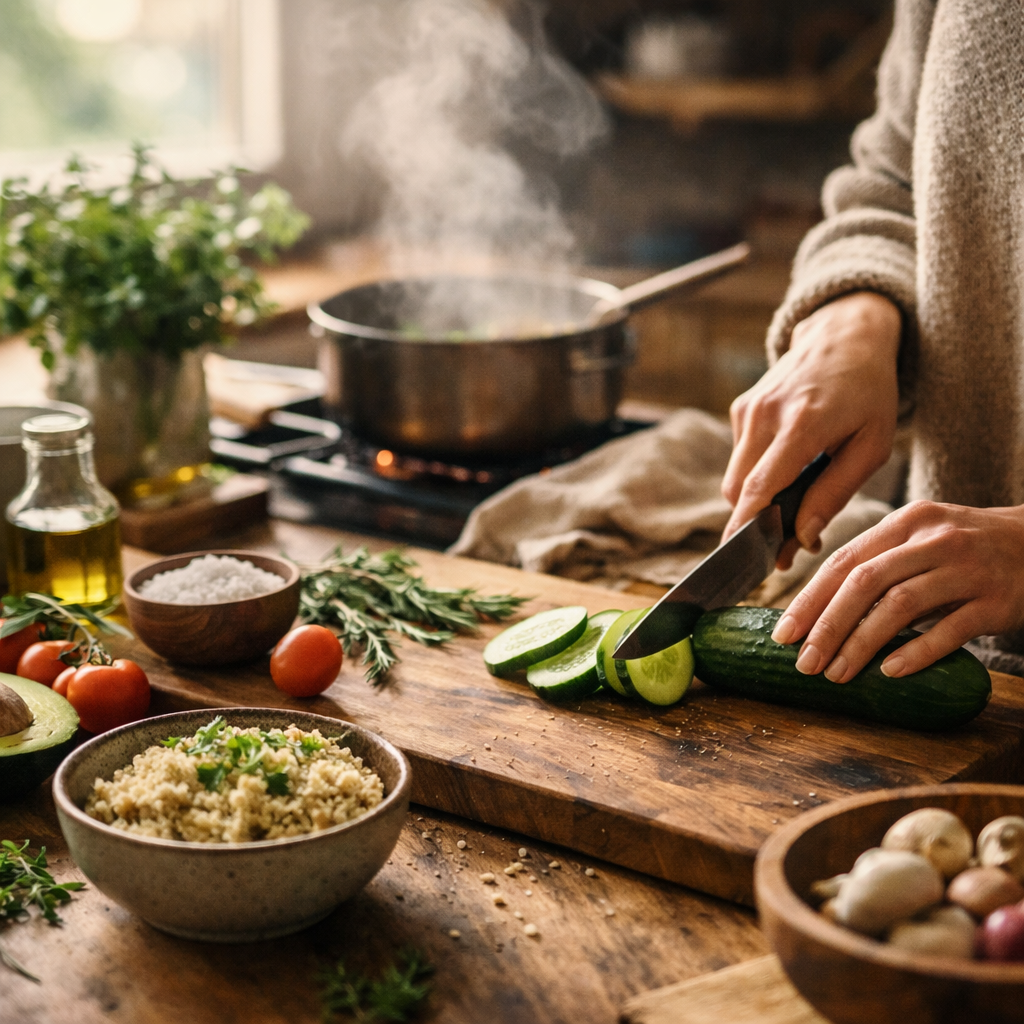
Mindful cooking begins long before the heat touches the pan. As you wash, chop, and prepare your ingredients, allow yourself to slow down. Notice the colors, textures, and subtle aromas that emerge with each step. This gentle shift in pace turns routine prep into a grounding ritual—one that invites calm and presence into your kitchen.
2. Sensory Awareness While Cooking
As your meal begins to take shape, let your senses guide you. Listen to the soft sizzle of vegetables meeting warm oil. Watch steam rise and swirl. Feel the rhythm of stirring or folding. When you anchor your attention to these sensory details, your mind naturally settles into the present moment, creating a soothing break from the day’s noise.
3. Breath‑Led Transitions
Between each step—moving from chopping to sautéing, or from simmering to plating—pause for one slow, intentional breath. These micro‑pauses act as gentle resets, helping you stay centered rather than rushing through the process. Over time, these breath‑led transitions become a powerful way to bring clarity and ease into your cooking routine.
4. Non‑Judgmental Observation
Mindful cooking isn’t about perfection. It’s about curiosity. If something cooks unevenly or a flavor doesn’t land exactly as expected, meet the moment with openness rather than criticism. This simple shift softens self‑judgment and encourages a more compassionate relationship with yourself—both in the kitchen and beyond.
5. A Mindful Eating Ritual
When your meal is ready, take a moment to transition from cooking to nourishment. Sit comfortably, breathe deeply, and observe your plate before taking the first bite. Savor the flavors slowly. This mindful eating ritual enhances digestion, deepens satisfaction, and completes the full-circle experience of cooking with presence.
Transforming Your Kitchen Experience
Transforming Your Kitchen Experience
Your kitchen can be more than a place to prepare meals — it can become a sanctuary for slowing down, reconnecting with yourself, and finding small moments of peace throughout the day. When you shift the way you move, breathe, and pay attention in this space, cooking transforms from a task into a grounding ritual.
Begin by noticing the atmosphere around you. The soft hum of an appliance, the warmth of the stove, the natural light falling across the counter — these subtle details invite you into the present moment. As you prepare your ingredients, let your movements be unhurried and intentional. Feel the weight of the knife, the texture of the produce, the rhythm of your hands working with purpose rather than urgency.
Allow your senses to guide you. The aroma of herbs opening in your palms, the gentle sizzle as vegetables meet the pan, the vibrant colors coming together — each one is an opportunity to pause and appreciate the experience unfolding in front of you. These sensory anchors help quiet mental chatter and create a sense of calm that extends far beyond the kitchen.
Most importantly, release the pressure to get everything “right.” Mindful cooking is not about perfection; it’s about presence. When something doesn’t go as planned, meet it with curiosity instead of frustration. This simple shift softens self‑judgment and turns your kitchen into a space where you can breathe, reset, and reconnect.
When you approach cooking this way, your kitchen becomes more than a workspace — it becomes a place of nourishment, creativity, and emotional grounding. A place where you can return to yourself, one mindful moment at a time.
The Connection Between Mindful Cooking and Self-Care
How Mindful Cooking Aligns With Today’s Self‑Care Trends
Mindful cooking fits seamlessly into the broader self‑care movement that continues to grow across wellness spaces. People are seeking practices that feel grounding, accessible, and woven into daily life — and cooking is becoming one of the most meaningful ways to meet that need. Instead of viewing meals as tasks to rush through, mindful cooking reframes the kitchen as a place to slow down, reconnect, and nourish both body and mind.
This trend mirrors the rise of micro‑practices in self‑care: short, intentional moments that help regulate the nervous system. Your mindful cooking techniques — slowing your pace, tuning into sensory details, and using breath‑led transitions — align perfectly with these emerging habits. They offer a way to practice presence without needing extra time, equipment, or elaborate rituals.
Mindfulness‑Enhancing Recipes & Activities
Certain recipes and cooking activities naturally support mindfulness because they invite sensory engagement and gentle focus. A few examples that pair beautifully with your brand:
- Chopping fresh vegetables for a simple stir‑fry — rhythmic, grounding, and perfect for practicing slow, intentional preparation.
- Simmering soups or stews — encourages patience, observation, and sensory awareness as aromas deepen over time.
- Baking bread or muffins — kneading, folding, and waiting for dough to rise creates built‑in pauses for breath‑led transitions.
- Herb‑based dishes like pesto, chimichurri, or infused oils — crushing herbs between your fingers heightens sensory presence.
- Warm, nourishing bowls (grain bowls, roasted veggies, brothy bowls) — ideal for mindful eating rituals that emphasize slow, intentional bites.
These activities mirror the same grounding qualities found in your other content — especially your Cooking for Self‑Care themes and your Mindful Eating guidance.
Connecting to Your Existing Topics for Deeper Insight
Your readers already resonate with the idea that everyday routines can become mindful rituals. This section naturally ties into several of your existing posts:
- Cooking for Self‑Care — reinforces the idea that nourishment is emotional as much as physical.
- Mindful Eating Rituals — extends the practice beyond the kitchen and into the moment of receiving nourishment.
- Mindful Movement — parallels the same principles of slowing down, tuning into the body, and using breath to create presence.
- Morning or Evening Micro‑Practices — shows how mindful cooking can become another anchor in a daily rhythm of grounding moments.
By linking these themes, you create a cohesive ecosystem of content that helps readers understand mindful cooking not just as a technique, but as a lifestyle — one that supports emotional regulation, nervous system balance, and everyday self‑connection.
Leave a Reply